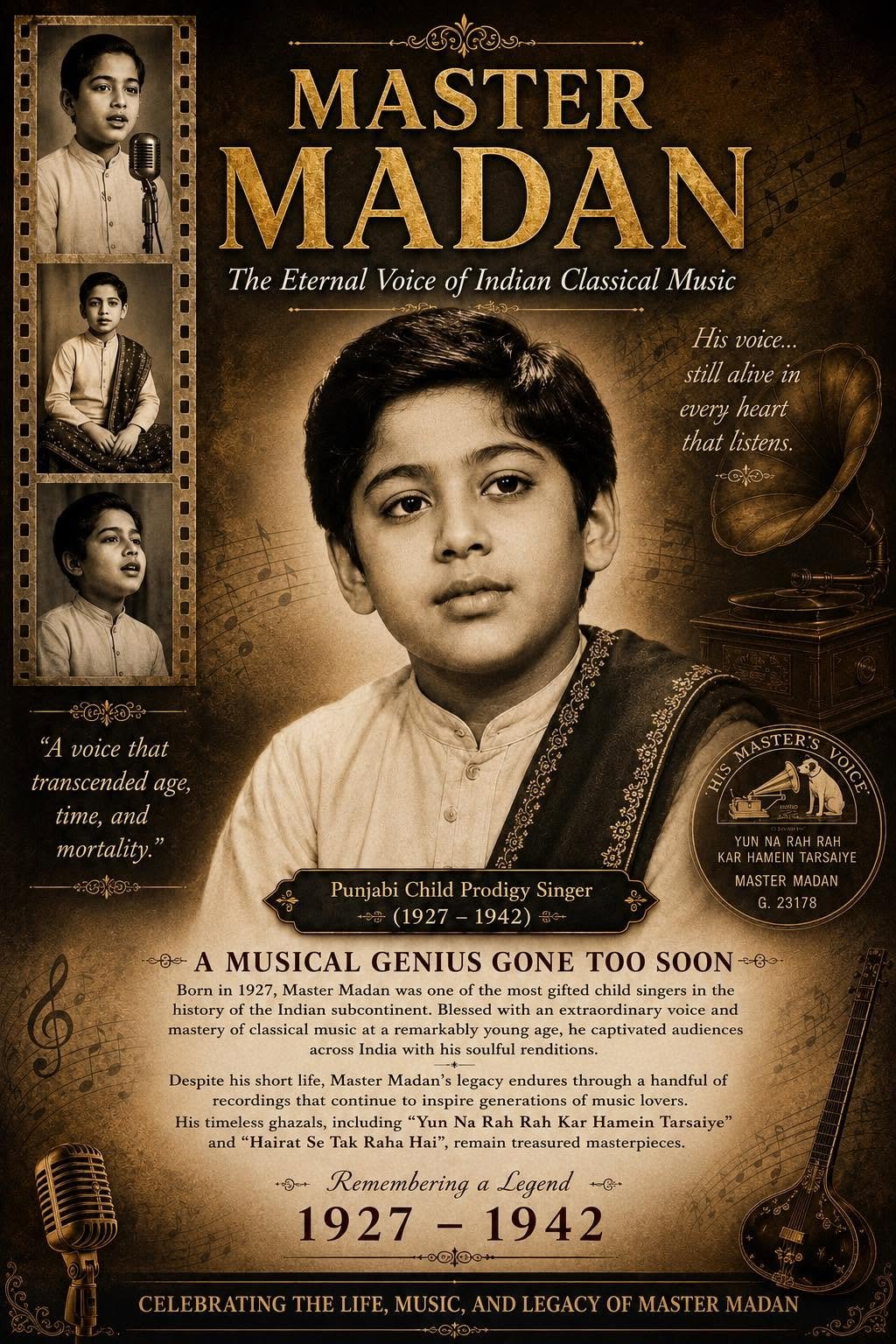
Life Period: 1927–1942
Another name that belongs in the story of Khankhana is Master Madan.
His contribution represents another essential dimension of a village’s heritage — education, knowledge and intellectual achievement.
The history of a community cannot be measured only through political leaders, soldiers, revolutionaries or sporting champions. Teachers and educators who influence generations can have an equally profound impact on society.
Master Madan therefore represents the importance of education and the contribution that Khankhana’s people have made beyond the boundaries of the village.
His story, like those of the other notable individuals associated with Khankhana, deserves to be properly researched, documented and preserved.
Follow us:
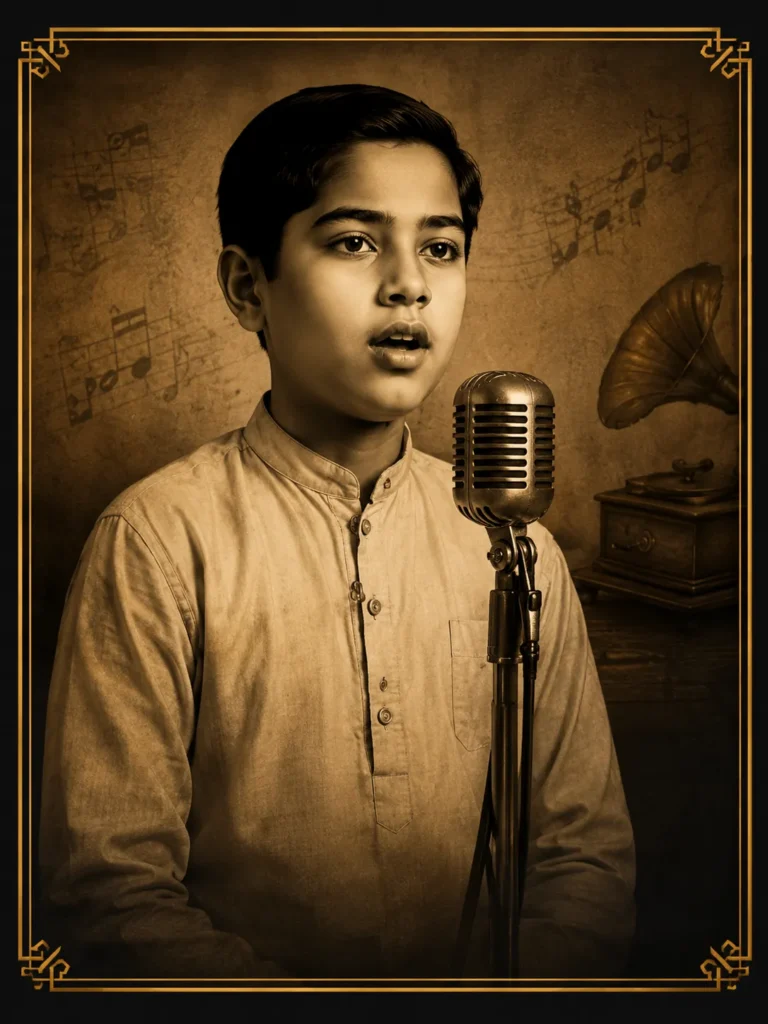

Master Madan was born on 28 December 1927 in Khan Khana, a village in Punjab’s Jalandhar district. From an exceptionally young age, his natural gift for music became evident.
Blessed with a melodious voice and remarkable command far beyond his years, he began performing publicly as a child. His extraordinary talent soon attracted listeners across the region and eventually brought him recognition throughout India.
What distinguished Master Madan was not simply his young age, but the maturity and emotional expression present in his singing. His voice carried a depth rarely associated with a child performer, allowing him to bring remarkable feeling to ghazals and other musical forms.
During the 1930s and early 1940s, his gramophone recordings captured this extraordinary talent for posterity. Although only a small number of recordings are known to have survived, they continue to fascinate generations of music enthusiasts.
Master Madan’s promising journey came to an untimely end when he died on 5 June 1942, at only 14 years of age.
His life may have been brief, but his music ensured that his memory would endure. Today, he remains a cherished figure in India’s musical heritage and a remarkable name connected with Khan Khana.